

|
|
|
|
| Author |
|
|
Registered
Join Date: Dec 2002
Location: Seattle
Posts: 661
|
Strange brake fade issue - 89 951
I’m looking for suggestions with this 86 944T brake problem. Note the title says 89; I tried to edit that but can't change it.
At a recent track day (the first for me in this car, which belongs to a friend), the brakes faded badly. By "fading," I mean that the pedal was high and hard, but ineffective at slowing the car once the brakes got hot. They felt fine when they were cooler but after 5 or 6 laps they just didn’t generate the desired slowing no matter how hard the pedal was pushed. If I backed off for a lap or so, they regained their effectiveness until the pace was increased, and then they'd fade again. The pedal never got spongy, soft, or low. And I wasn't driving beyond 8 tenths. The car is equipped with stock brakes *reportedly* fitted with Performance Friction 97 pads (now worn evenly to about the 35% level) and a fresh bleed with a good fluid (can't recall which). The rotors were nearly new in front, and look fine in the rear. And there’s are some front brake cooling ducts that were added by a shop. Those ducts have factory part numbers on them, but I don't know their origins. Any idea what could cause this? It doesn't sound like anything hydraulic to me. If it were hot fluid, we'd lose the pedal. It sounds exactly like classic lining fade – where the pads are getting too hot and losing friction. But I ran identical brakes and pads on my trackable 944 S2 for years of very hard running with absolutely no such fade, ever. A local shop suggested that it could be the master cylinder. He said that the aluminum master cylinders in that car are known to leak internally, and when they do so, it can cause a hard pedal. I’m having a hard time believing that a failed master cylinder could cause this sort of symptom. Can it? He also suggested it could be a leak of some sort related to the brake booster. But why only when the brakes are hot? And when the brakes were faded, stepping harder on the pedal didn't seem to help *at all* which is not consistent with a brake booster issue. Normally, I’d declare this to be symptomatic of the wrong friction compound, and that a more race-like compound would solve it. But those *are* a race compound. Or at least I'm told they're PF 97s, but there’s no way for me to confirm by looking at them. And the next step up (the PF 01) is not available in that size. Could it be that the pads are so low on friction material (35%) that they’re overheating? I never had that happen with my car – I regularly ran them nearly all the way to the backing plate. I hate to suggest that the owner replace the pads wtih new PF 97s, because I’m afraid he may have the same problem again. And I hate to replace the M/C when it doesn’t seem logical to me that it would be the cause. But leaving as is won’t work either… Got ideas? Any help would be appreciated. If you think it's the pads, what pads would you recommend? Rob Last edited by Rob 930; 06-18-2012 at 12:43 PM.. |
||
 06-18-2012, 12:09 PM
|
|
|
Registered
Join Date: Mar 2008
Location: Chicagoland
Posts: 2,695
|
it sounds more like yer losing vacuum assist....does the car stop on the street fine?
|
||
|
06-18-2012, 12:28 PM
|
|
|
Registered
Join Date: Dec 2002
Location: Seattle
Posts: 661
|
By the way, I mistyped the title and don't know how to edit it. It's an 86 951.
The car stops fine on the street, and fine until the brakes get hot on the track. Then it recovers if I let it cool for just a lap or so. I thought about vacuum assist too, but if that were the case, I wouldn't lose brakes so throroughly, it would just take more effort, right? When the fade occurs, the stopping power seems to be independent of pedal force, not proportional to it, as I would expect if the brake power assist were lost. |
||
|
06-18-2012, 12:42 PM
|
|
|
944 addict

|
When was the last time you rebuilt the calipers? If they're dirty and haven't had a rebuild done or replaced outright they could be sticking with the pads dragging on the rotor. That would cause premature heating of the calipers thereby cooking the fluid and causing the fade.
__________________
3 944's, 2 Boxsters and one Caman S, and now one 951 turbo. Really miss the Cayman. Some people try to turn back their "odometers." Not me. I want people to know 'why' I look this way. I've traveled a long way and some of the roads weren't paved. |
||
|
06-18-2012, 12:50 PM
|
|
|
Registered
Join Date: Dec 2002
Location: Seattle
Posts: 661
|
Quote:
|
||
|
06-18-2012, 01:33 PM
|
|
|
Registered

Join Date: Sep 2005
Location: Royal Oak, MI
Posts: 1,314
|
You are correct, as long as you have a pedal, you don't have hydraulic fade... so you're perhaps looking at finding a good lining material.
I personally very much like KFPs, but there's plenty of good choices out there. It would also be wise to resurface or replace the rotors while you're in there.
__________________
Vaughan Scott http://www.vaughanscott.com http://www.924.org |
||
|
06-19-2012, 04:47 AM
|
|

|
|
GorillaFoot

Join Date: Jul 2011
Location: largo, FL
Posts: 369
|
If you intend to keep going to track days, there are a few things that need to become religion. In regards to brakes, I would rebuild the calipers yearly, replace the master AND slave cylinders and get new brake pads and rotors. You don't want to leave anything to chance with brakes and starting off with stuff that you KNOW is the best way to go. Brake fade, regardless of the origination, can make for a disappointing track weekend. I now bring a second set of pads to the track, just in case.
I have a 1989 951 and it was a real process of replacing, modifying and finding the right pads for my car. Our 951's are not light (stock weight of about 3150lbs?). The stock 1986 951 does not have the rotors or calipers of my 1989, and I still had issues. After installing 968 cooling vanes, cryo treated front rotors, switching from ATE Blue to Motul 600 fluid, stainless steel brake lines, replacing the cylinders and switching from Hawk HP+'s (not a real track pad), to Hawk DTC-70's (destroyed rotors and still had hydraulic fade) and now finally to CL Brakes RC6E pads, I am happy to say I can go through a whole session with no issues. The CL Brakes were the icing on the cake- no pad fade and a bunch of other positives. But it sounds like it's your pads. It would not surprise me that the PFC's faded if they were 65% worn or/and glazed. Once race pads get past 50% worn, they will be more likely to "pad fade" and glaze (a glassy looking pad surface). Race pads generate a lot of heat and we tend to over-brake as the fade starts to come on, accelerating the process.
__________________
1989 951 Track car. Cayman GT4. Suncoast PCA Chief Tech Inspector. |
||
|
06-19-2012, 06:37 AM
|
|
|
Registered
Join Date: Dec 2002
Location: Seattle
Posts: 661
|
Thanks, all. I'm not familiar with either KFP or CL Brakes. I'll put them on my radar.
Despite my initial sense that this problem is a pad/rotor fade issue, I'm becoming less convinced of that the more I talk and read. Others have suggested to look again at possible vacuum issues that would reduce brake boost. What's strange is that this problem only happens during hot laps. It took 5 or 6 laps to develop, and then if I backed off for a lap or two the brakes would recover, but if I quickened the pace, I'd lose them again. And it sure felt to me that pushing harder on the pedal did nothing much to improve stopping. Sounds just like lining fade. But there was no burning smell or smoke, as I have often experenced when I've faded brakes in other cars, and there's no evidence of particularly high temps on the pads or the rotors. So what gives? Could it be that the complex vacuum system on the 944T has some sort of leak or defect? Maybe when hot lapping, wtih less time at part throttle, and the vacuum doesn't get replenished as fast in the brake booster. Or maybe the turbo boost pressure is somehow getting fed into to the booster and eliminating the necessary vacuum. A bad check valve somewhere maybe? The "hottest" laps are also the laps with the least time at part throttle adn the most time on boost. But I'd still think that a lack of brake boost wouldn't be that big a deal, and that I'd still feel I had control of the braking, albeit at higher pedal force. But I don't recall feeling I had much control during those moments. Has anyone had experience with what it feels like to drive a 944T with no brake booster? Any suggestions for diagnosing this possibility? BTW, we're going to replace the pads with new PF 97s. I'm convinced that the 97 is a perfectly good pad for this application and there should never have been fade under these conditions. That will eliminate any question of what pad we have. But I'm not convinced it will solve the problem, and I'm looking for collective experience that might help with getting to the root of the problem. |
||
|
06-19-2012, 11:58 AM
|
|
|
Registered
Join Date: Jan 2007
Posts: 2,370
|
Have you removed your dust shields to get more cold air in there to help keep everything as cool as possible? If not that might help with the fading issue.
|
||
|
06-19-2012, 12:32 PM
|
|
|
Registered
Join Date: Dec 2002
Location: Seattle
Posts: 661
|
As a follow up to this thread, the brakes seem to be fixed. All pads were replaced with PF 97s and it was bled with Motul RBF 600. But I don't think that's what solved the problem. Though we can't be completely sure, the pads that were removed seem likely to have been PF 97s, and they didn't appear to have been overheated. The new pads worked fine too. So changing the pads probably didn't change anything.
So I believe that the real problem, which I sort of dismissed at first, was that there was insufficient vacuum in the power booster during hot lapping. The check valve that prevents loss of accumulated vacuum (and infiltration of manifold pressure) into the brake booster was replaced. It's a $15 item. Afterward, during a recent track day, the hard pedal/inadequate deceleration problem was gone. Though the old check valve wasn't formally tested to see if it was leaking (and mouth pressure didn't show an obvious problem), it seems likely that it was the culprit. As part of the diagnosis, I clamped shut the vacuum feed to the brake booster to see how the car felt with no booster. I was amazed at how much pedal force it took to stop the car, even from 25 mph. And for some odd reason, it seemed that no matter how hard I pushed, the deceleration did not improve. This is not what I expected. I've never driven another car where the absence of brake boost rendered the car nearly impossible to stop. It's interesting that this problem acted just like hot, faded brakes. It only seemed to happen after several laps, when the car and driver were up to speed., and the brakes were hot. My theory is that when the driver was up to speed, the car was pushed down the straight at full throttle and the right foot went very quickly from the accelerator to the brake pedal at corner entry. The long straights at full boost allowed the leaking check valve at the booster maximum opportunity to dump whatever pressure was in the booster accumulator, with no chance of replenishment. Hence, it felt like brake fade. I found during testing that if I would pause for a second or two before applying the brakes after a long period of on-boost, full-throttle acceleration, the brakes would feel fine, but if I jumped from accelerator to brakes, I'd have diminished braking. This was the case even when the brakes were relatively cool. Hence, a couple seconds at closed throttle would build enough vacuum to give sufficient boost to the brakes. So I think there may have been a small leak at the check valve that bled down under just these precise circumstances. A new check valve seems to have fixed the problem. Rob Last edited by Rob 930; 07-16-2012 at 02:34 PM.. |
||
|
07-16-2012, 02:01 PM
|
|


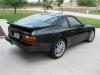 Porsche 944 NA
 1986 Porsche 951


