Quote:
Originally Posted by Evans, Marv

An old friend of mine's home burned down in a wildfire several years back. He has a sort of history of making poor decisions. He's retired and his safe was burned down to nothing in the fire. He told me "fire safes" weren't any good since his savings were burned up along with his safe.
|
Fire safes don't make things "fire proof". They just mean that if your stuff catches fire, and the fire dept gets there and puts the fire out within XX amount of time, that the contents should still be intact. If the fire burns until the whole house is gone, and that takes a few/several hours, then you're screwed because your fire-safe likely isn't designed to protect from that much heat for that long.
Quote:
The Fire Endurance test measures the degree of resistance which the safe has to temperatures determined by standardized fire exposure conditions.
In preparation for the fire endurance test, the safe is placed in a cold furnace so that all exterior surfaces will be exposed except the bottom. Heat measuring apparatus is installed in the interior of the safe and papers are loosely distrubted so that they are in contact with all interior surfaces. The doors of the safe are closed and locked, the furnace is closed and the fire is started.
The heat of the furnace is gradually increased according to set standards of time and temperature. The gas and air supply is adjusted carefully so that the fire is well distributed over the sample, and thermocouples symmetrically distributed in the furnace accurately record temperatures so that the test standards are maintained.
The test sample remains in the furnace for the period required for the desired classification. At the end of the time, the fire is extinguished and the sample is allowed to cool without opening the furnace. Here is the test times and temperatures for the various classifications:
TIME IN FURNACE
TEMPERATURE REACHING
Class A
4 hours
2000 degrees Fahrenheit
Class B
2 hours
1850 degrees F
Class C
1 hour
1700 degrees F
Class D
1 hour
1700 degrees F
Class E
30 minutes
1550 degrees F
After the test sample has cooled, it is opened and the contents and interior surfaces are examined. The records must still be usable and the interior must show no signs of undue heat transmission. At no time during the test must the temperature inside the safe exceed 350 degrees Fahrenheit. The general security of the safe is also examined. The records are considered "usable" if they can be handled without breaking and if the are decipherable by ordinary means.
|
Quote:
|
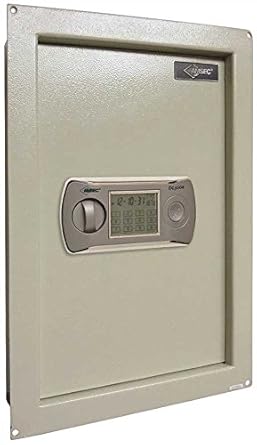
I always thought I'd like to make a hidden storage area between two studs in a wall disguised with a mirror or something.
|
That's called a "wall safe." You can get them in various sizes from only a few inches tall up to about 20" tall and I think I've even seen one before that was sized to hold rifles.
__________________
Steve
'08 Boxster RS60 Spyder #0099/1960
- never named a car before, but this is Charlotte.
'88 targa

SOLD 2004 - gone but not forgotten