Quote:
Originally Posted by GH85Carrera


Ironically the two main anti aircraft weapons of the US Navy in WW2 (the Bofors and the Oerlikon) were first produced by a foreign country, who intern sold the design to both sides of the war (Italy on the Axis side). Germany did not buy it and had to rely on captured pieces. The Bofors 40 mm Automatic Gun L/60 (often referred to simply as the "Bofors 40 mm gun", the "Bofors gun" is an anti-aircraft autocannon, designed in the 1930s by the Swedish arms manufacturer AB Bofors. The gun was designed as an intermediate anti-aircraft gun, filling the gap between fast firing close-range small calibre anti-aircraft guns and slower firing long-range high calibre anti-aircraft guns, a role which previously was filled by older outdated guns. The Bofors 40 mm L/60 was for its time perfectly suited for this role and outperformed competing designs in the years leading up to World War II in both effectiveness and reliability. American examples were made by Chrysler.
|
The guns weren't the real big deal, the VT fuzes were.
The Allies had these Variable Time proximity fuzes, so the altitude didn't have to be set for the Ack Ack, just aim , the shell would arm and then go off when the radio waves detected airplane proximity.
UK invention , US perfected it
Extremely lethal compared to regular altitude set fuzes.
First real use of micro electronics in battle.
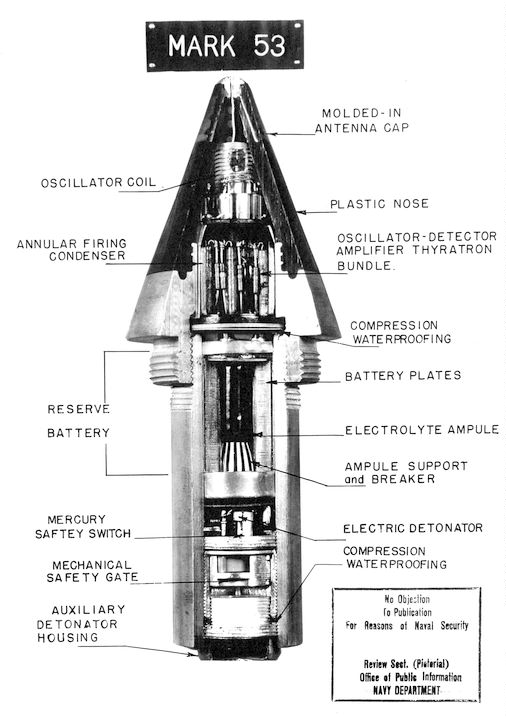
This made the US Nav SOOOOO much better at protecting its own ships
It saved lives, and reduced quantities of shells needed to take down a plane
which resulted in lower logistics needs to manufacture and transport the volumes to the war zones.