|
Back in the saddle again
Join Date: Oct 2001
Location: Central TX west of Houston
Posts: 57,042
|
Quote:
Originally Posted by GH85Carrera


Edinburgh Castle is a historic castle in Edinburgh, Scotland. It stands on Castle Rock, which has been occupied by humans since at least the Iron Age, although the nature of the early settlement is unclear. There has been a royal castle on the rock since at least the reign of David I in the 12th century, and the site continued to be a royal residence until 1633. From the 15th century, the castle's residential role declined, and by the 17th century it was principally used as military barracks with a large garrison. Its importance as a part of Scotland's national heritage was recognised increasingly from the early 19th century onwards, and various restoration programmes have been carried out over the past century and a half |
The coolest thing to me is that the castle is built on a volcano plug.
https://en.wikipedia.org/wiki/Edinburgh_Castle
Quote:
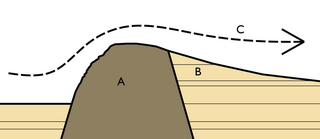
he castle stands upon the plug of an extinct volcano, which is estimated to have risen about 350 million years ago during the lower Carboniferous period. The Castle Rock is the remains of a volcanic pipe, which cut through the surrounding sedimentary rock before cooling to form very hard dolerite, a type of basalt. Subsequent glacial erosion was resisted by the dolerite, which protected the softer rock to the east, leaving a crag and tail formation.[8]
The summit of the Castle Rock is 130 metres (430 ft) above sea level, with rocky cliffs to the south, west, and north, rising to a height of 80 metres (260 ft) above the surrounding landscape.[9] This means that the only readily accessible route to the castle lies to the east, where the ridge slopes more gently. The defensive advantage of such a site is self-evident, but the geology of the rock also presents difficulties, since basalt is extremely impermeable. Providing water to the Upper Ward of the castle was problematic, and despite the sinking of a 28-metre (92 ft) deep well, the water supply often ran out during drought or siege,[10] including during the Lang Siege in 1573.[11]
|
Quote:
|
Diagram of a crag and tail feature, such as the Castle Rock: A is the crag formed from the volcanic plug, B is the tail of softer rock, and C shows the direction of ice movement. In the case of Edinburgh, the castle stands on the crag (A) with the Royal Mile extending along the tail (B)
|


And the fact that Loch Ness (and a bunch of of other lakes that connect end to end and) completely divides Scotland in two because they are the result of the faults above.

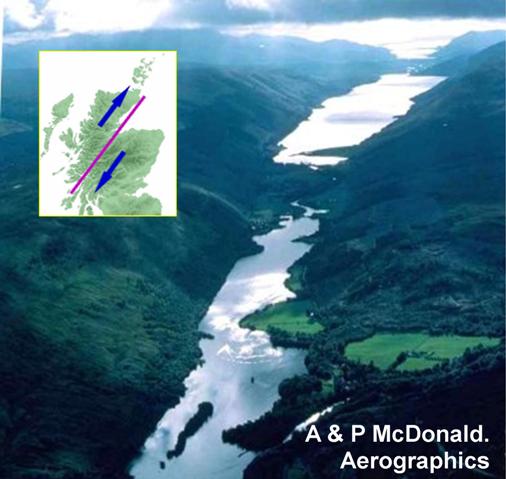
If you go to google maps and zoom in, you can follow the path of the lakes and rivers and a canal or two and find that you could cross Scotland in a boat, I'm pretty sure.
__________________
Steve
'08 Boxster RS60 Spyder #0099/1960
- never named a car before, but this is Charlotte.
'88 targa  SOLD 2004 - gone but not forgotten
|
 11-04-2022, 07:10 AM
|
|