Quote:
Originally Posted by drew1

I'm no electrician. I have learned from some good ones.
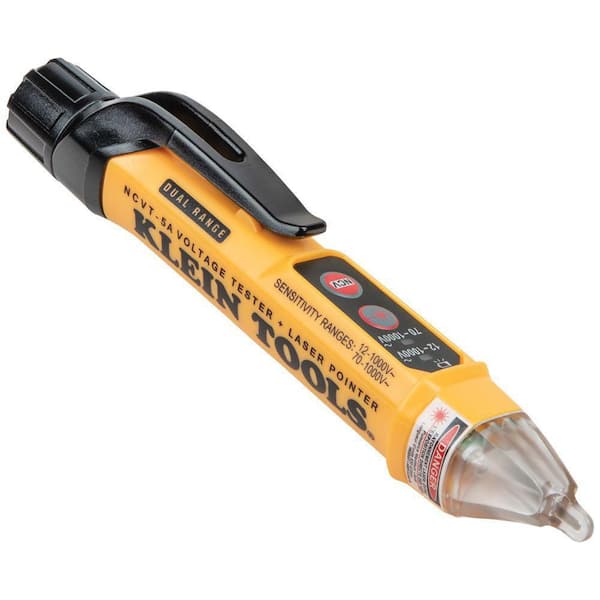
One of those voltsticks is good to have. A Cat 3 or 4 because it is real important to check wires under a house before cutting in to splice something. You are grounded under a house and 110V can kill. These voltsticks are small and handier than a meter since they can read the voltage through insulation. Even an amp clamp on a Fluke takes current flowing to measure. A voltstick will show that volts are available.
Check it out by sticking the tip in a good outlet so that you know it works. Then do what look 171 says. Hot wire checks good, disconnect any other hot wires and recheck outlet, As look says it could be downstream. Helping a daughter with no work Christmas ,a dead regular outlet was on the front porch. Hot wire was dead. My grandson had a lot more fun than me crawling under the house trying to chase a dead wire. Found a tripped GFI outlet that was hidden behind a cabinet in the garage.
One of those voltsticks is handy. Won't read through metal conduit, bit will find a hot wire inside sheetrock.
|
THey are awesome. Klein $19
https://www.homedepot.com/p/Klein-Tools-Non-Contact-Voltage-Tester-Pen-50-1000V-AC-NCVT1PR/317460355
or
https://www.amazon.com/Non-Contact-Detector-Klein-Tools-NCVT1P/dp/B099SJ6469/
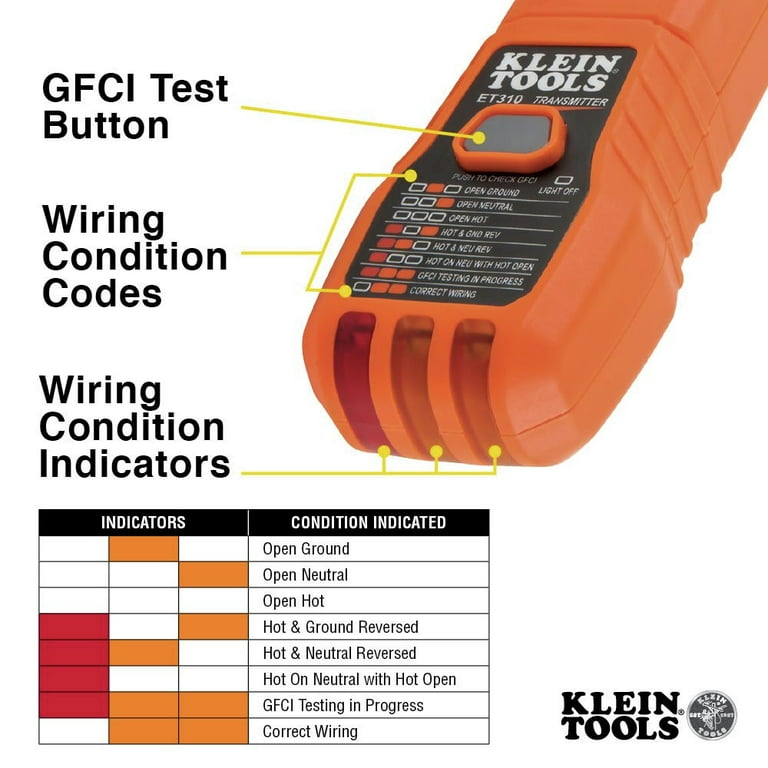
These are also a must have, IMO. You can confirm outlet wiring and they'll test a GFCI. And I think they are supposed to be a better test than the button on the GFCI, but I don't remember exactly what I read.
__________________
Steve
'08 Boxster RS60 Spyder #0099/1960
- never named a car before, but this is Charlotte.
'88 targa

SOLD 2004 - gone but not forgotten