Quote:
Originally Posted by john70t

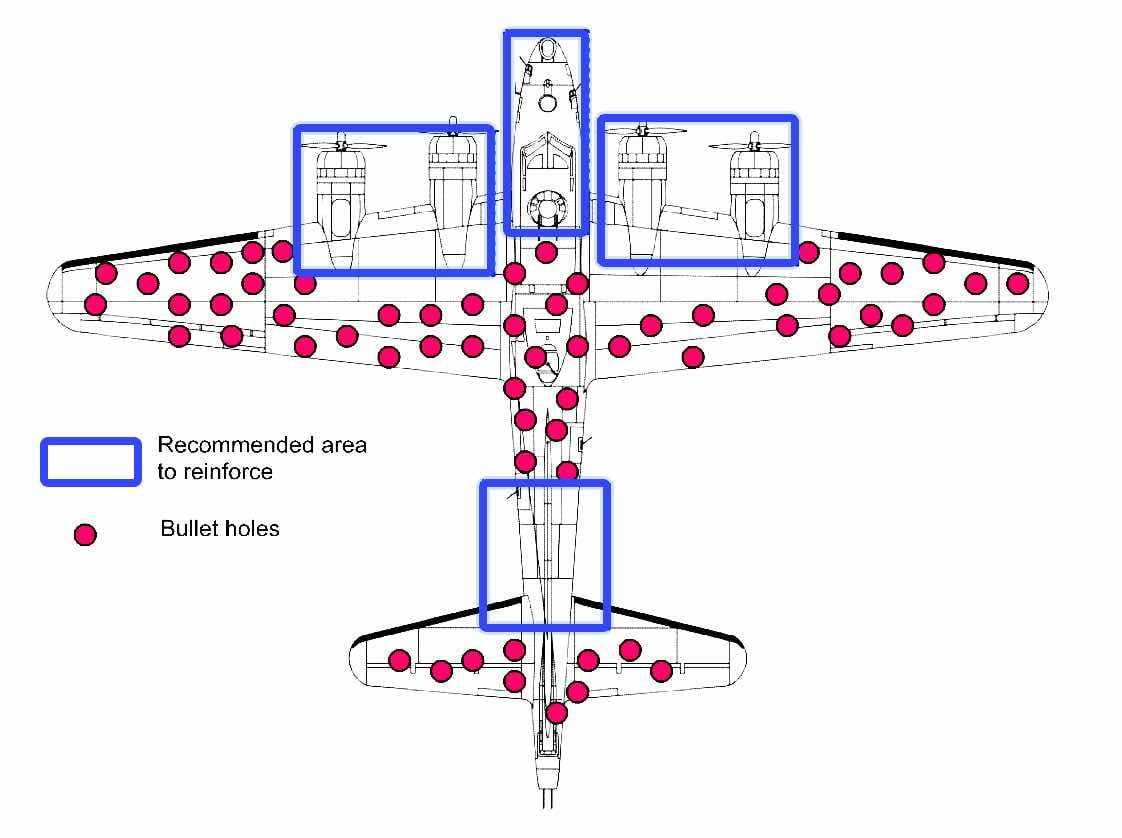
British aviation 'failure-analysis' teams decided to reverse the process.
Instead of finding all the airplanes shot down....They mapped the ones that survived the trip home.
Those were the areas that were 'known good'.
 |
The usually recounted story about this is that Abraham Wald was a mathematician with a statistical research group. The military approached the group with the request for them to confirm the military's theory that they should add more armor to the bits of the plane that had the most bullet holes. Abraham Wald told them, "no, you should add more armor to the places on the plane with no bullet holes."
The theory is that they were looking where there were bullet holes thinking "bullet holes are bad". But what Wald realized is that if the planes make it home with those bullet holes, then they aren't that bad. The bad bullet holes keep the planes from coming home, and those are in the spots where we don't see the bullet holes (because we don't get to analyze planes that don't come back). So the additional armor needs to go in the engines and to protect the pilot, because if you kill the engines or the pilot, the plane doesn't come back. This is an example of survivorship bias.
__________________
Steve
'08 Boxster RS60 Spyder #0099/1960
- never named a car before, but this is Charlotte.
'88 targa

SOLD 2004 - gone but not forgotten