

|
|
|
|
| Author |
|
|
Hilbilly Deluxe

|
 Boxster S brakes on a SC
I read in another thread that upgrading to Boxster brakes on a 911 SC isn't much of an improvement for the cost.
I passed a Boxster S in traffic a couple days ago, and saw it had some pretty substantial brakes on it. Has anyone tried to put these on a 911 SC? Wayne sells the calipers new for $350, and as more yuppies wad up their cars up they should become available on the used market. Looks like it may be an economical upgrade. Even with 4 new rotors and a master cylinder, it shouldn't add up to more than around $1500. Any thoughts or considerations? Tom ------------------ 82 911SC Coupe |
||
 11-05-2001, 02:42 PM
|
|
|
RETIRED

|
My personal thoughts on the subject....
Go with a an agressive pad and slotted rotors, cheaper and is MORE brkae than you will ever need, unless you have more 100hp than stock and plan on doing a 100 lap enduro at the track.... I use Pagid Orange pads, and I stop almost too well. About the only improvement "I" would make would be ABS.... When they make a kit that can be retrofitted for my SC or 914/6...I'm there... |
||
|
11-05-2001, 02:45 PM
|
|
|
Insert Tag Line HERE.....

|
i have the boxster upgrade kit on my SC and it is quite a difference on braking. They are alot bigger than stock. (not the S model) I paid right around $1,400 or so for the whole kit, --two calipers, adapters, four drilled rotors, and all pads. I also have a complete set for sale....... interested?????
|
||
|
11-05-2001, 04:38 PM
|
|
|
Registered
Join Date: Jan 2000
Posts: 6,950
|
In the latest Excellence this question came up: The verdict, stick with your own unless you can appreciable increase the rotor size and address both axles at once. The stoping power may be increased at a price of variations in threshold and wet conditions. Using the same rotor size but increasing the the friction rate as in the Boxter upgrade will increase the heat produced in your system. Without the larger rotor to dissapate the heat the advantage is negligable. I have looked into the upgrade for the last year and have researched it as much as I can. Big reds with larger rotors and possible a larger master cylinder is the best and unfortunately the most expensive improvement.
|
||
|
11-05-2001, 06:01 PM
|
|
|
Senior Member

Join Date: Jan 2001
Location: Left Coast, Canada
Posts: 4,572
|
I only *wish* I could take those fantastic brakes off Mrs. Z's Boxster S, and put them on my old SC. Come to think of it...nah...that would be a death wish!
|
||
|
11-05-2001, 06:10 PM
|
|
|
Registered
Join Date: Jul 2000
Location: So. Calif.
Posts: 19,910
|
"Without the larger rotor to dissapate the heat the advantage is negligable."
This is the common "con" (versus "pro") in using these brakes up front. I'm not a strict advocate or proponent for this brake upgrade as this only one of many, many one can do to a pcar. A large/wide rotor is not the only factor in heat dissipation. Sure it helps, but one can also plumb additional air to encourage brake cooling. Without an adequate air supply, even big brakes/big rotors can fail. With adequate cooling by whatever means (as long as the fluid doesn't boil or the pads don't disintegrate), I think an upgrade like this should be okay. Big Brembos with big Brembo rotors can also go over the edge. At some point, you're going to be limited by the size of the hardware inside the wheels and/or your wallet. If the vehicle is generating enough speed to overtax the brakes (big though they may be), you'll have to resort to some racer technologies to keep the brakes cool. What do the TransAm boys do to haul their 2600 lb, 600 hp cars down from 175. Not once but lap after lap? Sherwood Lee http://members.rennlist.org/911pcars http://www.seinesystems.com |
||
|
11-05-2001, 07:25 PM
|
|

|
|
Registered
Join Date: Jan 2000
Posts: 6,950
|
I just grabbed the #107 Excellence, so I can quote from it. The question happens to be 911SC brake upgrades. "It's never a good idea to upgrade only one axle's brakes. Increased braking capacity at one end of the car leaves that end prone to brake lock-up. While this will usually only happen near maximum braking, it's at this point that you most need your brakes to operate properly. Having your front brakes lock prematurely will lead to a loss of steering; if the rears lock prematurely, it will lead to a spin. The real danger on the street is that this will happen easily in th rain. So while it may feel dandy stopping in the dry at 80%, it might bite back in the wet at lower speeds. If you ever do any track events, this could be a serious problem as you approach "threshold" (or maximum) braking.
The best solution is to always upgrade both axles when considering a brake modification. Or, at the very least, look into using a brake pressure biasing valve to reduce the pressure of the over-braked axle. Finally Boxter calipers use a small brake rotor that's "just barely bigger that the SC original." His philosophy (Doug Arnao of Vehicle Craft Inc., 201 366 6577, who specializes in performance brake systems) is that a brake upgrade should start with a substantial increase in brake rotor mass before anything else is considered. This is what absorbs and dissipates the heat energy fron the brakes. If your rotors can't handle the heat, putting larger calipers (the heat generators) on rotors that have nearly the same mass will make for a loss of brake pedal pressure at any track day or high speed driving event." Apologies to those that have Excellence and this article. ------------------ 8 9 9 1 1, The last of the line. [This message has been edited by 89911 (edited 11-05-2001).] |
||
|
11-05-2001, 08:32 PM
|
|
|
Insert Tag Line HERE.....
|
All thats fine and dandy, and i agree with of the post but I have been using mine on the track for two years, and they are a huge improvement over stock, and i have had no bias problems at all.
|
||
|
11-05-2001, 09:03 PM
|
|
|
Registered

|
Ratlsnak, can you define what you mean by a "huge improvement"? What exactly was improved?
|
||
|
11-05-2001, 11:03 PM
|
|
|
Registered
Join Date: Jul 2000
Location: So. Calif.
Posts: 19,910
|
"...If your rotors can't handle the heat, putting larger calipers (the heat generators) on rotors that have nearly the same mass will make for a loss of brake pedal pressure at any track day or high speed driving event."
The key here is, "If your rotors can't handle the heat". As I was trying to point out, the size of a rotor is relative; it's only important if it overheats. If you can keep the critical temps. low enough to prevent brake fade, then using a larger rotor is overkill. If you can't, then a larger rotor will only take a little longer to overheat. Getting rid of the heat (aka cooling) is the key. What if brake fade still occurs with a large rotor? What then? Do you replace it with 2 in. thick rotors? How about 3 in. thick rotors? See my point? Larger rotors also add to the unsprung weight which isn't good for vehicle dynamics. I think one should attempt to balance good handling with adequate brake cooling. If more cooling is needed, use/try more robust materials (e.g. carbon, ceramics, larger/add'l air ducts, water spray, wheel fans, recirculating fluid, etc.) rather than automatically thinking large rotors are the answer. Of course, rear brakes must be addressed as well, but remember that the fronts take up a larger percentage of the load. Overall braking is maximized using either a brake bias pedal arrangement or some brake proportioning valving; the objective here is to have both front and rear brakes provide their maxium braking without either end locking up before the other. As long as the difference between front and rear brake systems is manageable, these methods should suffice. Just my $.02 Sherwood Lee |
||
|
11-06-2001, 12:38 AM
|
|
|
Back in the saddle again

Join Date: Oct 2001
Location: Central TX west of Houston
Posts: 56,614
|
Hmm, I say skip this upgrade and then upgrade all around to 930 brakes. That way you have a brake "system" that was designed to work together. While the upgrade may work and may work well for some people and there are people who can properly engineer things as well as Porsche I trust Porsche's engineering more than I would trust most people to tell me, "it'll work fine." It may, but Brakes are too important to compromise for cost reasons. As has been said, upgrade the entire brake system front and rear with a good balanced set (930) and that's only if you have run yours at the track and found them to be lacking and the instructors are telling you that you are braking perfectly but the brakes are inadequate.
Just my opinion FWIW ------------------ Steve Rennlist Member PCA Member '88 targa |
||
|
11-06-2001, 02:14 AM
|
|
|
Registered
Join Date: Jan 2000
Posts: 6,950
|
Quote:
------------------ 8 9 9 1 1, The last of the line. |
||
|
11-06-2001, 06:39 AM
|
|

|
|
Hilbilly Deluxe
|
Good discussion.
I haven't got the new Excellence yet. It seems the closer you are to their offices, the longer it takes to get it. I am about 90 min away, so my copy will probably show up about Friday. I never said anything about just upgrading one axle, I am really not sure where that came from. 930 brakes are on my long term list of upgrades, but I am just looking at other oprions. I may be a little low on the $1500 figure, I noticed one of Wayne's competitors shows a Boxster S brake kit for Boxsters for ~$2500. It comes with 4 Calipers, Rotors and pads, plus braided brake lines. For an 911 I would still need a larger Master cylinder, and some fabrication. How much does a set of Turbo brakes cost anyway? Are they available new, or would I have to get used ones? Tom ------------------ 82 911SC Coupe |
||
|
11-06-2001, 08:39 AM
|
|
|
Registered
Join Date: Jul 2000
Location: So. Calif.
Posts: 19,910
|
"If your not planning to maximize your braking effectiveness by pushing these brakes to the maximum of there ability, why bother? The stocks will do just fine. "
There's quite a bit of room (and dollars) between stock factory brakes and whatever the maximum is. For many, it may be just a change to more aggressive pads and changing the fluid every year. For those who find this inadequate, there's a whole bevy of brake upgrades, but it's quite a leap to go to Big Reds/Ceramic brakes and all that it entails if it's not really required; it all depends on the vehicle purpose. Here's an example: one vehicle with stock brakes; another with the Big Reds (or whatever). If both brake systems can lock the tires equally, which car stops faster? Answer: Same. If both vehicles can lock their tires equally after two successive high speed stops, which car stops faster? Answer: Same. If both vehicles stop from 60 mph in 200 feet, which car stops faster? Answer: Same (duh). The difference between the two systems is in the cooling recovery period. The brake system that can recover more quickly to below threshold brake fade will be more effective for repeated stops, regardless of "size". If you have a track car, then by all means go with the max. brake system (whatever that entails) to provide enough cooling cushion for repeated max. braking. If your vehicle is somewhere between racing and purely street use, then you decide how far you NEED (versus want) to go with upgrades. Some guys (with street cars) like the Big Reds more for the gee wiz factor than any concrete braking advantage, but that's another discussion. Some of you think Big Reds are the ultimate brakes. How about a set of 6-piston Alcons, AP's or Brembos with water circulation cooling? Of course, you'll need special wheels and other goodies to fit them, but they are bigger aren't they? At what point is it overkill? Another $.02 Sherwood |
||
|
11-06-2001, 09:17 AM
|
|
|
Registered
|
Quote:
------------------ Paul 78SC Targa Pelican Parts Members Gallery |
||
|
11-06-2001, 09:51 AM
|
|
|
Moderator

|
If you are considering brake upgrades you must consider your current brakes inadequate in some respect. Generally this dissatisfaction is either with thermal problems exhibited under track conditions or appearance. Most upgraders fall into one or perhaps both catagories(they are not mutually exclusive).
If appearance is the problem then the Boxster caliper with the 84-89 3.2 liter Carrera rotors(282x24mm F & 290x22mm R) as supplied with the kits is fine. You need to use front and rear boxster calipers on an SC or earlier car or your basic hydraulic f/r bias ratio goes over ~2. This is overly biased to the front promoting premature front lockup, the only normal use of such high front bias is on ABS equipped vehicles. The f/r rear Boxster calipers give a hbr of ~1.7 which is still a bit high, especially w/o ABS. The Boxster front when used with the 3.2 rear M calipers gives a hbr of ~1.65(still just a tad high but almost within the ballpark of the desired 1.55-1.6 ratio for 911/930). The 84-89 Carrera 3.2 rotors at 282x24mm F & 290x22mm R are a little bigger than the SC and earlier 282x20mm F & 290x20mm R rotors, as such they do give a bit better thermal endurance for track events. The problem with the smaller rotors which worked fine on the smaller lighter, lower hp cars is that they started reaching their thermal limits somewhere around the 2.7RS. Prior to that there was rarely a big problem stopping the cars even under track conditions for at least 20 min. I know that my 2.4S was fine and never boiled fluid. On the other hand my Carrera 3.0 was good for only 15min of a 20min run group, the last 5 min was spent pumping and praying that the car would slow, let alone stop. These smaller rotors and calipers continued to be used until 84 when the rotors were slightly upgraded and the caliper pistons were also made larger. Unfortunately the cars got faster and heavier almost every year. There are aids to cooling the rotors thus increasing their thermal capacity, ductwork helps, high performance pads help etc. These are bandaids. The cure was found with the brakes found on 78-89 930. The 304x32mmF & 309x28 perferated rotors have enough thermal capacity for the heavier, faster later cars. The hbr at ~1.6 is at the aggresive end of desireable. They will not fade or boil fluid in a street car used for DE. In addition the calipers provide higher clamping force on the increased lever arm of the larger rotors. This allows you to stop faster IFF larger wheels and tires are fitted. The whole wheel, tire, rotor, caliper works as a system to stop. The weakest link in single stops is almost always the relatively small front tires. The bigger brakes alone will not stop the car any faster, no matter how big the rotor or caliper. All of the above rotor /caliper combos work ok with the smaller early 19 mm non power boosted master cylinders. This is no longer true when the next step to the little red 944/964 caliper is taken, These calipers should be used with the 304x32 & 309x28 930 rotors for their thermal capabilities but their larger pistons will require a larger mc(23mm non boosted or a 930 23.8mm boosted mc), The advantage of the larger mc pistons besides pushing enough fluid for the calipers is increased ability to modulate brake line pressures under high load conditions. The smaller the mc pistons relative to slave pistons the more like a light switch the brakes become(this is exagerated but true in principle) The next step up is the 928/993 caliper used with a 322x32 mm front rotor. These calipers use even larger pistons and are over kill unless you have a very heavy/fast car. They also require matching rear calipers also with larger pistons to keep the hbr around 1.57 Even larger is the true Big Red, the pistons remain the same as the 993 caliper but pad size goes up. The benefit here is that the thermal loads are distrubuted over a larger suface area minimizing temp rise overall. ----------------- Bill Verburg My Home Page  My Pelican Gallery page My Porsche Owners Gallery Page My Pelican Gallery page My Porsche Owners Gallery Page |
||
|
11-06-2001, 04:18 PM
|
|
|
Moderator

|
Bill
There have been some really good responses on the whole brake thing, but you definitely da man! Do turbo brakes fit inside ANY 15 or 16" Fuchs (ie 6") or is there a minimum spacing required? Also, I am probably going to convert the '69 to S calipers with 3.2 rotors up front and space my calipers for vented rotors at the back. In the BBSs opinion, will this be appropriate for a '69 with a 230hp 3.0 engine which won't ever see more than a drivers ed??? Thanks ------------------ Cameron Baudinet 1975 911S (in bits) 1969 911T |
||
|
11-06-2001, 07:07 PM
|
|
|
Hilbilly Deluxe
|
Bill, do I read that right that the 78-89 930 brakes can use the stock 911SC master cylinder?
How much does a set of 930 brakes cost anyway? Are they available new, or would I have to get used ones? Tom |
||
|
11-06-2001, 07:24 PM
|
|
|
Moderator
|
930 calipers with 304mm or 309mm rotors will fit in 15x7(or larger) +23.3mm os Fuchs, never tried 15x6 but I doubt that they will fit any 6" rim. To use S calipers with 3.2 liter Carrera rotors you must also use the caliper spacer that the Carrera A caliper used. Without the spacer the S will not straddle a 24mm wide rotor. The late Carrera A caliper will only be slightly heavier, will be more riged, correctly straddles the 24mm rotor, will be easier and cheaper to obtain and still matches up correctly hydraulicly with the rear M caliper. If the wider Carrera rear rotors are to be used a comparable spacer for that caliper must be obtained. A poor second choice for rear caliper would be the Carrera M, but its pistons are too big necessitating a proportioning valve for the back circuit.
My personal opinion of the Carrera rotors for a 230 hp ~2200 lb car is that they will be marginal, but somewhat better than stock. I believe that Jack Olsen is using the 19 mm non boosted mc with his 930 setup, last I heard he was quite happy with it, perhaps he will add his own comments, particularly as to cost, as he did this mod in the not too distant past. As to availability new??? If they are available the cost will be prohibitive, they frequently pop up at recyclers though. Tom Fitzpatrick recently acquired a set of used 930 rotors and calipers for his 3.6 swap. He frequently posts on the Rennsport board( http://forums.rennlist.com/ ) ------------------ Bill Verburg My Home Page My Pelican Gallery page My Porsche Owners Gallery Page |
||
|
11-06-2001, 08:18 PM
|
|
|
Registered
Join Date: Jul 2000
Location: So. Calif.
Posts: 19,910
|
Bill, you amaze me with your Pcar brake knowledge. Thanks for the nice info. However, I do have one slight correction. The S calipers are monoblock; 1 piece. There was a European Car mag. article awhile back describing how an S caliper was machined slightly wider to straddle the Carrera rotor (24mm), but I would highly discourage this mod.
BTW, what is the piston size for the rear M vs. the Carrera Ms? Sherwood Lee |
||
|
11-06-2001, 11:39 PM
|
|


 1982 Porsche 911SC Coupe 3.2
 Da cab
 78 Porsche 911 Turbo
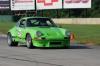 1972 porsche 72 rsr clone
 1995 porsche 993
 1995 porsche 993
 1990 porsche C2 911
 1966 porsche 911
 1984 Porsche 911
 2003 Porsche 996
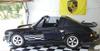 1978 Porsche SC Targa 3.6
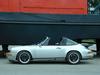 1976 Porsche Carrera 3.0
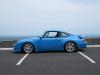 1995 Porsche 993 Carrera Coupe
 1975, 1969 Porsche 911S, 911T 2.7S CIS, 2.0T ca
