THE PERFECT ENTRY-LEVEL PORSCHE
Pablo Deferrari
Friday, July 31, 2015
A revolutionary creation from the house of Porsche is about to challenge
the way you think about the Marque.
It repeats history by following the principles Porsche was founded on - it
also redefines them. Provocative by nature, it shocks purists yet invites
them with its benevolent appearance and familiar charm.
How it seamlessly blends efficiency and performance is a work of art; that
its economical nature belies such sporting pedigree is a work of genius.
So, what exactly is it?
"I wanted to design a car young people could afford." Dr. Ferry Porsche's
concept wasn't as simple as it seemed. To fulfill this abstract, Porsche was
to create a car that's inexpensive to manufacture, economical to service,
maintain and run without compromising on the pleasures of ownership or
driving experience. The outcome was to bring a new kind of clientele into
the family that starts off with this entry-level car and eventually explores
Porsche's more exclusive models.
The criterion was simple. This sports car would be small, light and energy
efficient - precisely what Ferry had in mind when creating 356/1 in 1948. It
would also be far more refined, possessing predictable manners that
pleasantly surprises the more experienced while flattering those less so.
Practicality, durability and reliability are a given.
Like its forbear, it would hum to the beat of four cylinders. The exterior
design would be timeless - not exactly breath-taking at first gaze, but
certainly an aesthetic promising to look fresh and transcend fads.
Configured as a 2+2, the commodious interior and generous amount of
luggage space defies the stereotypes of sporting cars as we know them.
The break in tradition lies under the skin.
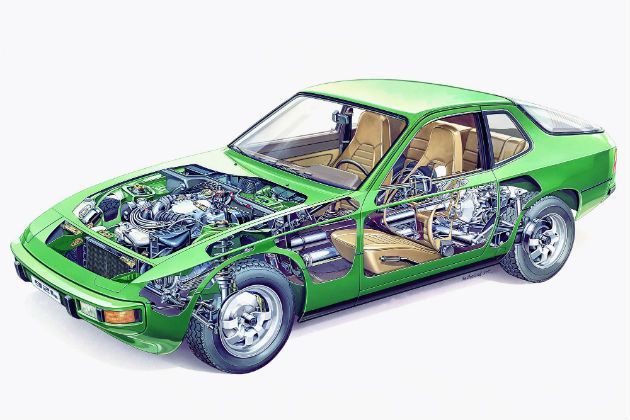
The cylinders would be in-line, water-cooled and live at the front of the
car, separated from the gearbox that lives at the opposite end. This
configuration makes for near-perfect weight distribution between the front
and rear of the car, 52 percent and 48 percent, respectively.
The engine and gearbox are connected by a rigid torque tube that houses
the driveshaft and forms the spine of the car, adding strength to the
chassis - a benefit in the event of a front- or rear-end shunt. This tidy
drivetrain package simplified the manufacturing process, too. Once
subframes, suspension pieces and other assemblies were attached to it,
the entire unit could be bolted directly to the chassis.
Wherever possible, components made by Volkswagen and Audi are used.
This strategy has proven itself in the past, and although those who have
conveniently forgotten this bit of history may scoff at the notion, by no
means does it detract from the car's pedigree.
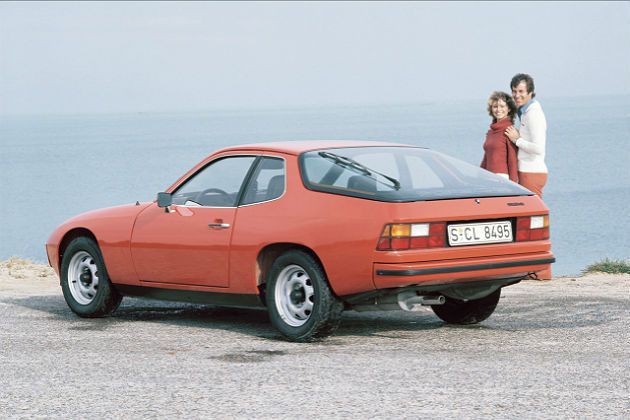
At first glance, the resemblance to its ancestors is subtle. The swoop of
the tail, a nose without an opening, a smooth body unspoilt by frivolous
bits and aggressive aerodynamic aids, the gentle curves of the sides that
elegantly disappear as the eye follows them downward. There's no
mistaking whence it came.
Its wind-tunnel-perfected shape promises low drag and wind resistance.
The sloping hood and subtle chin spoiler ensure that the front gets sucked
to the ground at speed as it quietly cuts through air that rolls off the raised
tail. With its well-distributed mass, low weight and hunkered-down stance,
cross winds and high speeds do little to disturb its stability.
Moving in, you sit low. The 911-type seats embrace your form, promising
comfort in a journey and firmness in a spirited jaunt. Everything you need
is within reach. The gearlever is a wrist's flick away from the low-slung
steering wheel, while the pedals hang directly in front of your feet.
Looking over your shoulder, you realize the potential amount of space
available with the seats folded down - you and your significant other could
lie down back there and stare at the stars. Did Zuffenhausen's designers
subliminally encourage romance?
Oil pressure, clock and voltmeter placed directly above the gearshift lend
an air of racing pedigree. The speedometer's a comfortable glance down.
To its left lies a combination of fuel and temperature gauges flanked by
warning lights, and on its right is the tachometer with its eccentrically
placed increments putting redline directly top and center.
If the conical covers over the gauges seem like a stylistic move, they're
not - they were designed to reduce glare. Not a single element in the
cockpit escapes Porsche's attention to detail. Everything has a purpose.
Porsche does have a whimsical side, however, and nothing demonstrates
this more than the colors it chose to clothe this pragmatic goodness.
Shades from the primary color chart like green, blue, red and yellow give
this Porsche a cheery persona, while others like black, brown, white and
metallics accentuate its sophistication. Some of the interior fabrics paying
homage to Op-Art, Berbers and Tartans proclaim its individuality and
further separate it from the humdrum.
Design and engineering are but two of the qualities that Zuffenhausen
infuses on this little wedge, and it's the end result that proves this
Porsche's mettle.
To better understand just how good the performance of this little car is, a
comparison with a contemporary 911 is in order. You'll wonder how
Porsche has managed to do so much with so little.
-Its top speed is a mere 5 mph short of the 911.
-It's a nip more than one second slower from naught to 62 mph and
lagged 2.3 seconds behind in the quarter-mile dash.
-On contemporary tires, it pulled 0.87g of lateral acceleration on a
skidpad, exactly the same as the 911.
-Despite having two fewer cylinders, being short 700cc, and down 40
horsepower and 55 pound-feet of torque, it can still give the 911 a run for
its money.
-Even more impressive is its ability to sip fuel. During city driving it gets
17-20 mpg, 42 mpg at a steady 56 mph, while the lead-footed will be
pleasantly surprised to see it can achieve nearly 35 mpg at 75 mph.
The media reports helped to further bolster its image swaying the
undecided and the skeptics alike in its favor.
In an issue of Motor Trend, one journalist was impressed by the solid feel
of the shifter, praising the gear changes, describing them as positive and
sure. He commented on its excellent and neutral handling when pushed
hard around curves, and how its acceleration is deceptively strong
"moving out quicker than you think," easing into higher speeds, where it
feels relaxed. The car had him sold.
Autoweek observed how its smart colors and shape "easily stopped traffic
wherever the car was taken, from Sunset Boulevard to Big Sur." A few
groaned about the harsh ride that took sinkholes in stride but twitched
rolling over a pebble. In its defense, Michael Jordan, in an issue of Car and
Driver, acknowledged this reaction but offered how the "harsh ride
disappeared and became a tenacious roadholding."
What may be considered perhaps the ultimate trial and testament of this
Porsche's pedigree came with three grueling journeys across the globe.
The first, an homage to Jules Verne's "Around the world in 80 Days,"
involved traversing five continents totaling more than 13,864 miles. The
trip was done in 28 days without incident.
Then, a group of journalists had a go running up and down the Brenner
Autobahn at high speeds for 100 hours averaging nearly 72 mph and 28
miles per gallon.
The third jaunt would go down in the record books - a trip from the
northern-most town on Earth, Hammerfest, Norway to the southern-most
town, Ushuaia, Argentina, piling nearly 20,000 miles in two months onto
the same car used in the previous two expeditions. The only mechanical
failure was a broken shock absorber.
Yes, Porsche had made Black Forest gateau from a bucket of sand and
water.
By now, one of two conclusions may have been drawn. Either you thought
this might be a new addition to Porsche's growing family, or the ninth
paragraph confirmed the whiff you got by the seventh that this isn't a new
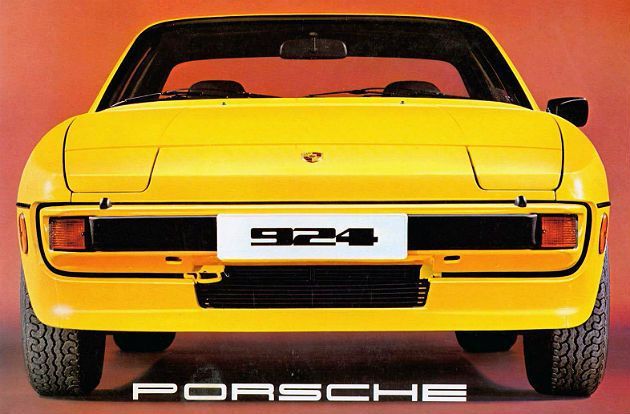
model at all - it's the 924.
The paragraphs above could fit nicely in any modern car's brochure. Few,
however, would venture to even entertain the thought that they, in fact,
describe a car created nearly 40 years ago. 40.
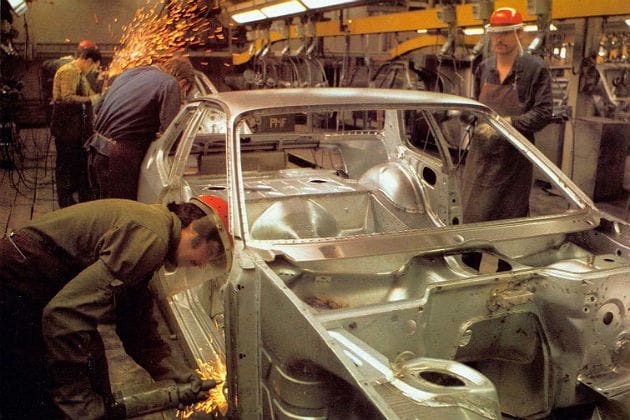
This little car embodies Porsche's old-world traditions and methods of
design, engineering and manufacturing. The 924 wasn't just some mass-
produced "Volks-Porsche," this was a car that was largely hand-built by
craftsmen who welded sheet metal, brazed seams and sanded any
irregularities on the finished body by hand.
Few will realize that hand-sewing upholstery and hand-assembly of
engines and gearboxes wasn't limited to the 911 or the 928 that
immediately followed. The 924 was borne of the same methods. There's a
reason why this car cost the equivalent of roughly $45,000 in today's
money; being entry level wasn't synonymous with being cheap.