

|
|
|
|
| Author |
|
|
Get off my lawn!

|
    On August 10, 1838, twenty-one Texas Rangers under Colonel Henry Wax Karnes camped along Seco Creek in Medina County when approximately 200 Comanche warriors attacked without warning. The Rangers, including future frontier legend Jack Hays, found themselves outnumbered ten to one. Karnes immediately ordered his men into a nearby ravine where thick brush provided cover against the mounted attackers. The Texans developed an effective defensive strategy despite their numerical disadvantage. Six or seven men fired while others reloaded, creating continuous volleys that prevented the Comanches from overrunning their position. This rotating fire technique allowed the Rangers to maintain steady resistance throughout the engagement. The Comanches launched three separate charges, fighting with determination and tactical discipline. However, the battle turned decisively when Chief Isemani fell dead and Chief Casemiro sustained serious wounds. Twenty Comanche warriors lay dead with an equal number wounded. The war party gathered their casualties and withdrew to their village. The Rangers achieved a decisive victory but paid a price. Colonel Karnes, who directed the defense from an exposed bluff position, suffered wounds during the engagement. Several Ranger horses were killed, though no Texan deaths were recorded. This August clash demonstrated how defensive positioning and disciplined fire could overcome superior numbers. The engagement represented another chapter in the violent frontier conflict between Anglo-Texan settlers and Comanche bands defending their territory. Colonel Karnes had raised his Ranger companies specifically to patrol and defend the Texas frontier, authorized by the Republic just eight months earlier in December 1837. 
__________________
Glen 49 Year member of the Porsche Club of America 1985 911 Carrera; 2017 Macan 1986 El Camino with Fuel Injected 350 Crate Engine My Motto: I will never be too old to have a happy childhood! |
||
 01-26-2026, 01:17 PM
|
|
|
Back in the saddle again

Join Date: Oct 2001
Location: Central TX west of Houston
Posts: 57,042
|
Quote:
The theory is that they were looking where there were bullet holes thinking "bullet holes are bad". But what Wald realized is that if the planes make it home with those bullet holes, then they aren't that bad. The bad bullet holes keep the planes from coming home, and those are in the spots where we don't see the bullet holes (because we don't get to analyze planes that don't come back). So the additional armor needs to go in the engines and to protect the pilot, because if you kill the engines or the pilot, the plane doesn't come back. This is an example of survivorship bias. 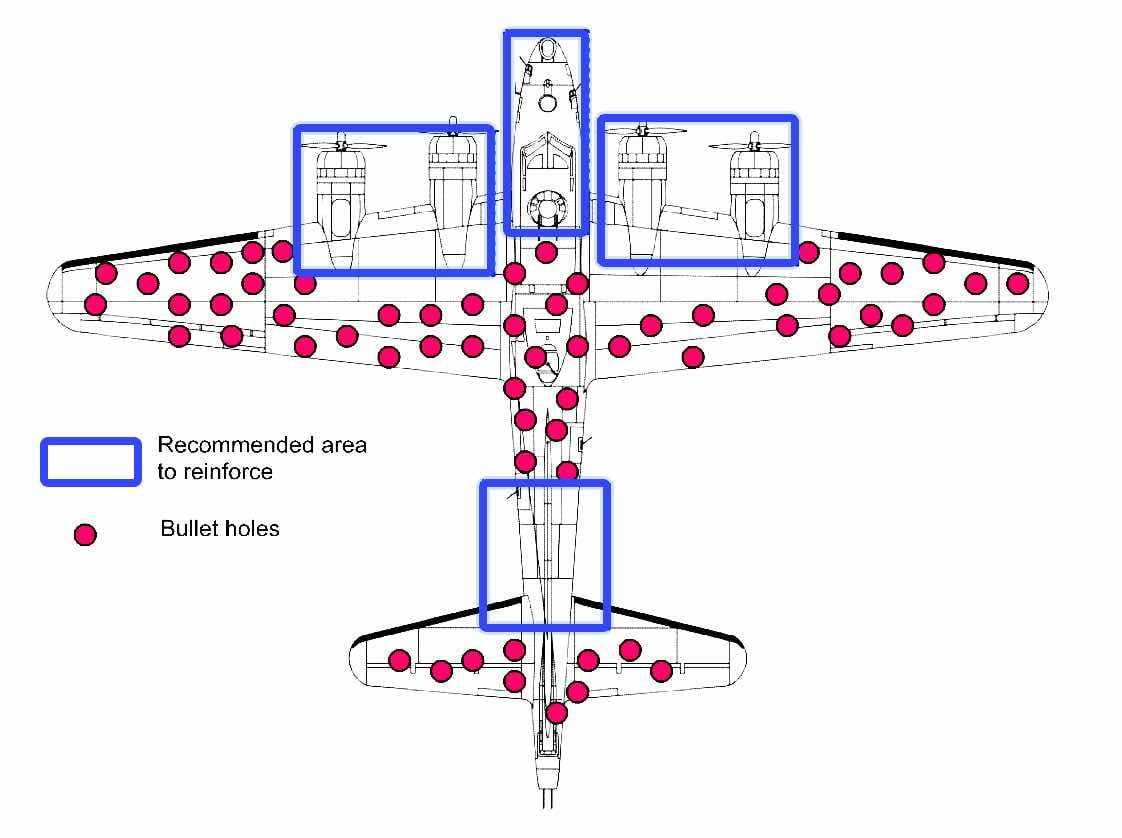
__________________
Steve '08 Boxster RS60 Spyder #0099/1960 - never named a car before, but this is Charlotte. '88 targa  SOLD 2004 - gone but not forgotten SOLD 2004 - gone but not forgotten
|
||
|
01-26-2026, 01:31 PM
|
|
|
Get off my lawn!
|
     It will be a smothering of snow!  
__________________
Glen 49 Year member of the Porsche Club of America 1985 911 Carrera; 2017 Macan 1986 El Camino with Fuel Injected 350 Crate Engine My Motto: I will never be too old to have a happy childhood! |
||
|
01-26-2026, 02:09 PM
|
|
|
Edministrator

Join Date: Aug 2003
Location: SF east bay
Posts: 25,436
|
 
__________________
Good post? Leave a tip! O - $1 O - $2 O - $3 |
||
|
01-26-2026, 09:17 PM
|
|
|
Get off my lawn!
|
     From over 1.5 million kilometers away, astronomers have spotted methane clouds drifting above the vast seas of Titan, Saturn’s largest moon. Using the James Webb Space Telescope and confirmed by Keck Observatory in Hawaii, scientists captured bright, fluffy clouds hovering above Kraken Mare, Titan’s giant northern sea. Despite being 1.4 billion kilometers from the Sun, Titan experiences a complete cycle of rain, rivers, and seas—but instead of water, it’s liquid methane and ethane! These new observations reveal active weather patterns, showing clouds forming, shifting, and evolving over just 30 hours. This discovery highlights the power of teamwork between space- and ground-based telescopes, helping scientists refine climate models for this organic-rich, mysterious world. As future missions like Dragonfly prepare to explore Titan, tracking its clouds will be key to understanding its weather—and maybe even hints of habitability. 
__________________
Glen 49 Year member of the Porsche Club of America 1985 911 Carrera; 2017 Macan 1986 El Camino with Fuel Injected 350 Crate Engine My Motto: I will never be too old to have a happy childhood! |
||
|
01-27-2026, 06:08 AM
|
|
|
Get off my lawn!
|
    A museum volunteer accidentally altered a modern art piece after mistaking it for a dirty mirror and attempting to clean it. The artwork, titled Inverted Syntax-16, consisted of a mirror mounted on a wooden board that had been intentionally left covered in dust for decades. According to museum staff, the dust was not neglect. It had been allowed to accumulate for nearly 40 years as part of the artist’s original concept. A deliberate smudge at the center of the mirror was meant to represent distorted self-perception and social identity. The dusty surface was the artwork itself. While walking through the gallery, the volunteer reportedly believed the mirror had been overlooked during cleaning. Using toilet paper, they wiped away much of the dust before staff noticed what was happening. By that point, the intended surface of the piece had been largely removed. The museum later issued an apology to the artist and began discussions about possible compensation. Legal experts noted that determining responsibility could be complicated, as removing dust may not clearly fall under traditional definitions of property damage. The incident added to a growing list of similar situations involving modern art. In previous years, gallery staff in Italy discarded an installation they believed was trash, and a security guard in Russia drew directly on a painting he thought looked unfinished. Some observers suggested the incident itself could now be interpreted as part of the artwork’s evolving meaning.  
__________________
Glen 49 Year member of the Porsche Club of America 1985 911 Carrera; 2017 Macan 1986 El Camino with Fuel Injected 350 Crate Engine My Motto: I will never be too old to have a happy childhood! |
||
|
01-27-2026, 07:40 PM
|
|

|
|
Get off my lawn!
|
  A Bailey Electric car, powered by an Edison Storage Battery, photographed during its 1,000‑mile endurance run in 1910.   The Depot at Ellsworth, Kansas. Taken in 1867. Library of Congress.  
__________________
Glen 49 Year member of the Porsche Club of America 1985 911 Carrera; 2017 Macan 1986 El Camino with Fuel Injected 350 Crate Engine My Motto: I will never be too old to have a happy childhood! |
||
|
Yesterday, 11:48 AM
|
|
|
Edministrator
Join Date: Aug 2003
Location: SF east bay
Posts: 25,436
|

__________________
Good post? Leave a tip! O - $1 O - $2 O - $3 |
||
|
Yesterday, 05:12 PM
|
|
|
Get off my lawn!
|
 During the American Revolution, the British Army in the South was led by the ruthless Banastre Tarleton. His dragoons (cavalry) were famous for the "Tarleton Quarter"—meaning they took no prisoners; they slaughtered everyone. In January 1781, American General Daniel Morgan ("The Old Wagoner") was being chased by Tarleton. Morgan stopped at a place called Cowpens, South Carolina. He decided to turn and fight. But Morgan had a problem: Most of his army was militia—untrained farmers who were terrified of British bayonets. Usually, militia would fire one shot and run away. Morgan knew this. So, he didn't tell them to be heroes. He used their fear as a weapon. The Trap Morgan set up his lines in three rows. Row 1: Sharpshooters hiding in the trees. Pick off the officers, then retreat. Row 2: The Militia. Morgan told them, "Just give me two shots. Aim for the men with the epaulets (officers). Fire twice, then you can run away." Row 3: The Continental Regulars (hardened veterans). They would stand and fight. The Battle On January 17, Tarleton attacked. The sharpshooters fired and fell back. The militia fired two devastating volleys, decimating the British officers. Then, as ordered, they turned and "ran away" behind the hill. Tarleton saw the militia running. He thought it was a rout. He ordered a full charge. The British broke formation and ran into the "trap" screaming for blood. They ran straight into the solid wall of Row 3—the Continental Regulars. The Regulars fired a point-blank volley and charged with bayonets. At the same time, the "fleeing" militia circled around the hill and attacked the British from the left. American cavalry attacked from the right. It was a Double Envelopment—the perfect military maneuver. The British were surrounded. In less than an hour, Tarleton's army was destroyed. 110 British killed, 800 captured. American losses: Only 25 killed. It was the tactical masterpiece of the war and the beginning of the end for the British in America.    Church in Attu, Alaska. Circa 1894/1895. Library of Congress.  
__________________
Glen 49 Year member of the Porsche Club of America 1985 911 Carrera; 2017 Macan 1986 El Camino with Fuel Injected 350 Crate Engine My Motto: I will never be too old to have a happy childhood! |
||
|
Today, 06:46 AM
|
|
|
Edministrator
Join Date: Aug 2003
Location: SF east bay
Posts: 25,436
|
  
__________________
Good post? Leave a tip! O - $1 O - $2 O - $3 |
||
|
Today, 06:48 AM
|
|
|
Get off my lawn!
|
 Photograph taken of shuffling boxes outside the Drawing Booth for the land opening at El Reno, Oklahoma.. The land runs had proven too chaotic so a lottery system was established for potential land seekers.  Omaha, Nebraska. May 1879. The courtroom was packed. On one side sat the United States Army attorneys. On the other sat Chief Standing Bear of the Ponca tribe, worn out and grieving. A year earlier, the US government had forcibly removed the Ponca people from their home in Nebraska and marched them to a reservation in Oklahoma. The conditions were horrific. One-third of the tribe died from starvation and malaria. Among the dying was Standing Bear’s 16-year-old son, Bear Shield. On his deathbed, the boy made his father promise: "Do not bury me in this strange country. Take me home." Standing Bear kept his word. In the dead of winter, he and 29 others walked 600 miles back to Nebraska, carrying the boy's bones. When they arrived, they were arrested by General George Crook. But General Crook was a soldier with a conscience. He didn't want to send them back. He secretly told the local newspapers, and a team of lawyers volunteered to help Standing Bear sue the government for his freedom. The government’s argument was cold and simple: Under American law, an Indian was not a citizen. An Indian was not even a "person." Therefore, Standing Bear had no right to be in court. He was property of the government. As the trial ended, Standing Bear was allowed to speak. He didn't use legal jargon. He stood up, facing the judge. He held out his right hand in front of him. He waited for the silence to settle. "That hand is not the color of yours," he said softly. "But if I prick it, the blood will flow, and I shall feel pain." He looked at the judge. "The blood is of the same color as yours. God made me, and I am a man." The courtroom erupted in tears. Even General Crook was weeping. Days later, Judge Elmer Dundy issued his ruling. He ignored the government's protests and wrote a sentence that had never been written in US history: "The Indian is a 'person' within the meaning of the laws of the United States." Standing Bear was free. He buried his son in the Niobrara River valley, proving that the law can be wrong, but the truth is undeniable.    
__________________
Glen 49 Year member of the Porsche Club of America 1985 911 Carrera; 2017 Macan 1986 El Camino with Fuel Injected 350 Crate Engine My Motto: I will never be too old to have a happy childhood! |
||
|
Today, 06:52 AM
|
|


 Carrera


