

|
|
|
|
| Author |
|
|
Registered User
Join Date: Jan 2012
Posts: 2
|
Choosing a low temp thermostat
I posted a thread before and somehow still can't see it so this one might be a duplicate.
From the list of thermostats in Pelican parts page, which one is the 'correct' low temp thermostat. Porsche 996 Cooling System Miscellaneous - Page 1 As can be seen there are at least 3 brands (Wahler, LNE and MotoRad), and they vary in prices. If they are fundamentally the same, why would I get the most expensive one? The Wahler one has this "Water Thermostat, Low Temperature (begins opening at 160 deg F) with Cover and Gasket, 996 Carrera 2/4 (1999-04) Brand: Wahler" Thanks for your help!! |
||
 01-20-2012, 03:45 PM |
|
|
Registered
Join Date: Jan 2004
Location: Pittsford, NY
Posts: 3,721
|
I'm on a similar learning curve with a 996 I just purchased. From what I read the 160 degree is the right temp for use. The LNE thermostat I think needs extra parts associated with the install vs a straight replacement. Have a read at the LN Engineering website and I'd appreciate your interpretation.
I am in the process of rebuilding the motor and will probably install a new 160 degree thermostat that drops right in.
__________________
Tony G 10 Porsches come & gone! 1962 Morgan Plus 4 
|
||
|
01-21-2012, 04:03 AM
|
|
|
Registered User
Join Date: Jan 2012
Posts: 2
|
Yes I was talking about the low temp ones (160 degree).
You can reuse the housing but will need to replace the gasket. I think LN's comes with the housing, hence the higher price. You don't need the 'tool' to change the thermostat. Use the cap of your shaving cream can. Gasket is about $5. However if you see on the page from my link above there is one from Wahler ($70), LN (170) and MotoRad ($80-ish). The question is whether any three will do the job, or do I have to use LN's. LN says that their thermostat is made in Germany. I wonder whether it's just a Wahler or MotoRad? |
||
|
01-21-2012, 08:41 AM
|
|
|
Registered User
Join Date: Mar 2012
Posts: 1
|
According to post #9 by JFP, the LN thermostat is made by MotoRad.
Service time for water pump and thermostat question - 986 Series (Boxster, Boxster S) - RennTech.org Forums Last edited by 1stpcar; 03-27-2012 at 10:13 AM.. |
||
|
03-26-2012, 06:16 PM
|
|
|
Registered
|
I'm curious - why are you going to a low temp thermostat?
If you're under the impression that it will lower the running temperature of the coolant, you may be wrong. I was considering putting a low temp thermostat in my '01 996 which is in good condition and stock. But I was curious to see how much the temp would fall. As an experiment, I removed the stock thermostat which has the engine running at an indicated 185F. Without any thermostat? Yup, an indicated 185F. It turns out that the thermostat is usually only for warming the engine more quickly and is NOT the limiting factor of temp. The capacity of the cooling system is the limiting factor. May save yourself a lot of time and trouble by trying this test on your vehicle before popping big $$ for a low temp thermostat.
__________________
'09 Cayman '01 996 Carrera, RIP '79 911SC Targa sold to a collector in Germany! '87 944S sold! '86 944 sold! '74 914 2.0 sold but not forgotten - my favorite |
||
|
12-26-2014, 07:59 AM
|
|
|
Registered

Join Date: Aug 2010
Location: Earth.............
Posts: 2,908
|
Quote:
Secondly, the thermostat, assuming it is functioning correctly, acts as a throttling mechanism that controls the minimum steady state operating temperature of the engine. As such, it controls the lowest temperature that the engine will run at. Dropping the coolant temps from their normal 205-210F levels to around 175F with a 160F stat significantly reduces the inherent hot spots in these engine's that typically lead to problems like cylinder head cracking. The cooler coolant temps also lower the oil temps nearly 25F, which results in a huge improvement in the oil's life expectancy and performance. Changing to a 160F stat is one of the cheapest significant modifications you can make to one of these engines.
__________________
Accrochez-vous bien de vos rêves..........." |
||
|
12-26-2014, 08:58 AM
|
|

|
|
Registered
Join Date: Aug 2010
Location: Earth.............
Posts: 2,908
|
Quote:
__________________
Accrochez-vous bien de vos rêves..........." |
||
|
12-26-2014, 08:58 AM
|
|
|
Registered
Join Date: Jan 2010
Posts: 31
|
Quote:
The temperature levels that your engine thermostat opens up at are designed this way for specific reasons due matching the features of the car/engine such as if you have three rad's or are using a Tip or PDK etc. The engines all have a temperature specification that the coolant has to be at (within a + or -) and this relates to emissions and other engine related reasons. The 'belief' that lowering the coolant temperatures is *always* better is urban myth and 1980's thinking when talking about a well maintained engine with modern ECM's control units. Over cooling an engine (out of Porsche spec's) is a sure fire way to set off a CEL or damage the engine in the long term. There are good reasons for factory operating specifications for normal use vehicles.
__________________
1999 996 C2 |
||
|
12-31-2014, 11:37 AM
|
|
|
Registered
Join Date: Aug 2010
Location: Earth.............
Posts: 2,908
|
Quote:
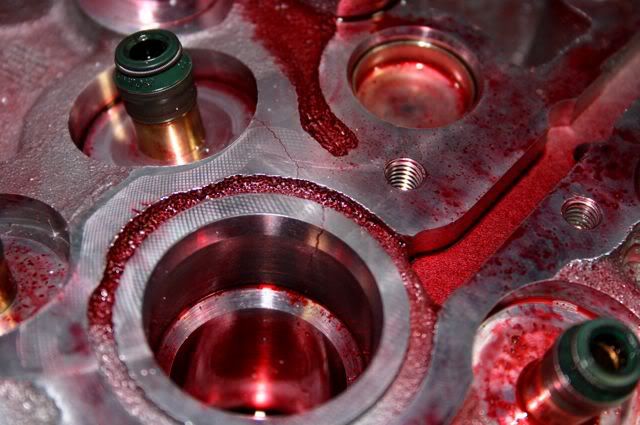 Switching to a low temperature stat not only dramatically lowers the overall coolant temperature, but it also equally dramatically lowers the temperatures of the known hot spots in these heads, and brings them closer to that of the adjacent casting areas, reducing the physical stress on the castings caused by the otherwise high thermal loadings. As for a low temperature stat causing a CEL, that is complete nonsense. With literally hundreds of customers running one, some for nearly a decade, I have never seen a CEL that could be attributed to lowering the coolant temperatures. Add in the reams of UOA's collected over the years on the cars running the low temperature stats, and you notice that the oil in the engines with the lower coolant temperatures holds up longer (stays in grade) without any signs of increased water or fuel intrusion. The improvement in oil longevity has also be born out when we have had the opportunity to check the rod and crank bearings on engines that had run the 160F stat for long periods of time, both on the street and the track. And just as a by-the-by, Porsche uses the same type of low temperature stats as OEM components in their highest performance engines, the ones found in the GT2, GT3, and Turbo cars
__________________
Accrochez-vous bien de vos rêves..........." Last edited by JFP in PA; 12-31-2014 at 02:05 PM.. |
||
|
12-31-2014, 01:41 PM
|
|
|
Registered
|
So why doesn't Porsche provide a 160F v. 180F as the recommended thermostat?
Also, since I live in Florida, the thermal limit of the cooling system may remain my constraining factor.
__________________
'09 Cayman '01 996 Carrera, RIP '79 911SC Targa sold to a collector in Germany! '87 944S sold! '86 944 sold! '74 914 2.0 sold but not forgotten - my favorite |
||
|
01-20-2015, 05:05 PM
|
|
|
Registered
Join Date: Aug 2010
Location: Earth.............
Posts: 2,908
|
Quote:
__________________
Accrochez-vous bien de vos rêves..........." |
||
|
01-20-2015, 05:21 PM
|
|
|
Registered User

|
Quote:
I live in Florida too and installing a 160 thermo made a noticeable difference in my running temp with a negligible increase in warmup time. I also have a 3rd front radiator installed. This past weekend I did a PCA autocross and was running the car for well over an hour and pushing it hard on the track. Granted it was only in the low 70's outside but it was sunny too. My oil temp peaked no higher than 210-215 and kept dropping to just a hair under 200 between runs, which is where it typically runs now whenever I drive it. Previously it was typical to see temps in the 225-250 range. This is on an 05 C2S btw. |
||
|
01-20-2015, 06:06 PM
|
|
|
Registered User

Join Date: Jan 2015
Posts: 21
|
" Dropping the coolant temps from their normal 205-210F levels to around 175F with a 160F stat significantly reduces the inherent hot spots in these engine's that typically lead to problems like cylinder head cracking. The cooler coolant temps also lower the oil temps nearly 25F, which results in a huge improvement in the oil's life expectancy and performance."
With all due respect to JFP (I've read many of his posts here, on RennTech and several other forums - he's clearly an accomplished and competent mechanic) and any others who believe this; While I believe that lower coolant temps reduce inherent hot spots, how does a Thermostat "drop" the coolant temps. in an engine? Please no nasty/smarmy/flaming type replies. If someone feels like they have to "stick up" for the low temp. T-stat, please try to stick to facts and/or data to back up your argument/theory. 
|
||
|
01-21-2015, 05:05 PM
|
|
|
Registered
Join Date: Aug 2010
Location: Earth.............
Posts: 2,908
|
Quote:
By starting from a lower minimum temp, and returning to it when air flow over the cooling system allows, both coolant and oil temperature's are reduced, and any inherent "hot spots" caused by the mechanical design of the engine castings are running cooler.
__________________
Accrochez-vous bien de vos rêves..........." Last edited by JFP in PA; 01-22-2015 at 03:11 AM.. |
||
|
01-22-2015, 03:03 AM
|
|
|
Registered User
Join Date: Jan 2015
Posts: 21
|
"By starting from a lower minimum temp, and returning to it when air flow over the cooling system allows, both coolant and oil temperature's are reduced, and any inherent "hot spots" caused by the mechanical design of the engine castings are running cooler."
Ah... So you're saying that due to the T-stat opening at 160 degrees, the block and oil temps NEVER reach the higher temps that they would reach with the 180 degree t-stat - therefore lowering the overall operating temp. of the motor ? This seems to make sense - much more so, than the T-stat "controlling" the coolant temperature. Thanks for the reply
|
||
|
01-22-2015, 04:36 AM
|
|
|
Registered
|
Quote:
Not so. Although the thermostat sets the minimum operating temperature, the actual operating temperature is a function of the thermal efficiency of your cooling system. Might the somewhat divergent opinions be summarized as follows? - Cooler operating temperatures is likely to minimize head cracking. - Cooler operating temperatures is likely to result in improved performance. - Cooler operating temperatures will decrease heater efficiency. Yes, I know, but in some regions this is important. - The minimum operating temperature is established by the thermostat. - The actual operating temperature is a function of the thermal efficiency of the vehicle's cooling system. Above the constraint of thermostat temperature, as per above. - To achieve a significantly lower operating temperature, a lower temperature thermostat may be insufficient by itself. - Utilizing a lower temperature sensor to activate the radiator fans may reduce operating temperatures particularly in low speed applications, e.g. traffic. - Utilizing a bypass switch to activate the radiator fans may be desirable in performance applications. - The use of a third (center) radiator will improve the thermal efficiency of the cooling system. - If your temperature gauge is acting 'like an idiot light' it is likely that you have a problem in the sensor, gauge, or wiring that needs to be remedied. In my experience, these are reliable and yield repeatable results. Granted it is a single location measurement but this measure can be read with confidence. I return to my original statement - before investing in a low temp (i.e. 160F v. 185ish) thermostat, remove your thermostat and see how much (or little) the operating temperature falls. Then you can make an informed decision as to how to best invest your funds. BTW, I am running a 160F Motorad thermostat sourced from Pelican and I see a typical operating system reduction (Interstate speeds) of maybe 10deg off the stock thermostat. When participating in a track event, there is no change in peak operating temperature at all from the stock thermostat - both run about 200F. It may be my imagination, but I believe I see a slight increase in fuel economy as well - maybe an additional 1 mpg.
__________________
'09 Cayman '01 996 Carrera, RIP '79 911SC Targa sold to a collector in Germany! '87 944S sold! '86 944 sold! '74 914 2.0 sold but not forgotten - my favorite |
||
|
01-31-2015, 07:15 AM
|
|
|
Registered
Join Date: Aug 2010
Location: Earth.............
Posts: 2,908
|
Quote:
Interestingly, dyno testing before and after switching to a 160F stat has also shown a slight mileage and very small but consistent power increase, believed to be the result of better engine efficiency at the lower operational temperatures.
__________________
Accrochez-vous bien de vos rêves..........." |
||
|
01-31-2015, 10:28 AM
|
|
|
Registered
Join Date: Aug 2010
Location: Earth.............
Posts: 2,908
|
Quote:
__________________
Accrochez-vous bien de vos rêves..........." Last edited by JFP in PA; 01-31-2015 at 01:12 PM.. |
||
|
01-31-2015, 10:38 AM
|
|

|
|
Registered
Join Date: Jan 2009
Location: maryland
Posts: 271
|
I just had the opportunity to check a 2000 996 yesterday. Yes the dash gauge was inaccurate on the left side of 180. About 10 degrees worth. It seemed to get accurate about 190 and above. But the curious thing that I noticed is that the pulse width for the injectors didn't stabilize untill it reached 190. At 150 pulse width was 3.2 ms. At 190 it dropped to 2.9ms and remained at this value while temp was increasing. Does this not imply that it is tapering off the cold start network untill the thermostat opens. This would result in a perceived power increase (richer mixture) if the fuel trims didn't kick in.
So the bottom line question is if you put in a lower stat would the DME think that the engine is still cold and not fully warmed up for the fuel control? |
||
|
01-31-2015, 11:59 AM
|
|
|
Registered
Join Date: Aug 2010
Location: Earth.............
Posts: 2,908
|
Quote:
__________________
Accrochez-vous bien de vos rêves..........." Last edited by JFP in PA; 01-31-2015 at 01:56 PM.. |
||
|
01-31-2015, 01:11 PM
|
|


 Miss Scarlett

 SOLD - '86 911 Carrera 3.2
 SOLD - '05 997 C2S
 '09 E92 M3

